
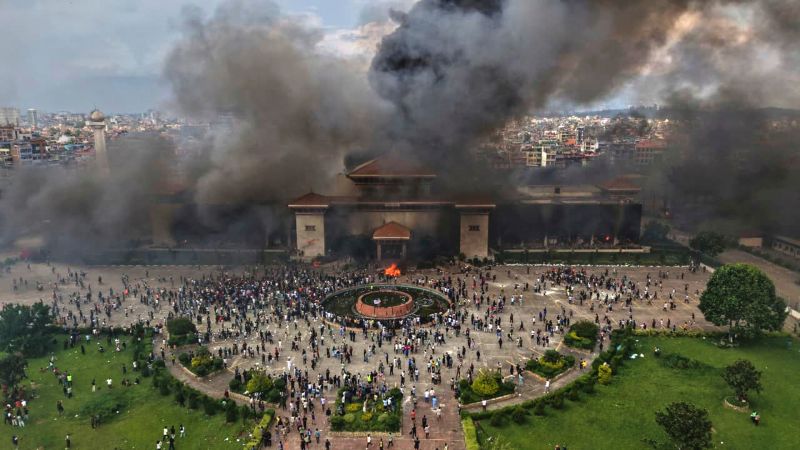
Violent protests erupted in Nepal, resulting in approximately 20 deaths and the burning of the country’s Parliament building. The unrest saw the homes of top leaders torched as demonstrators clashed with authorities. Nepali Prime Minister K.P. Sharma Oli resigned on Tuesday amid escalating violence.
Protesters, many young, stormed Parliament in anger over a social media shutdown and corruption, according to reports. Footage showed the burning of Nepal’s Parliament, while local officials described clashes between protesters and riot police. One protester claimed police fired indiscriminately, injuring a friend. Over 100 people, including 28 police officers, were hospitalized with injuries.
The government had banned access to social media platforms like Facebook, Instagram, YouTube, and WhatsApp, citing concerns over misinformation and fake accounts. However, the ban was lifted Tuesday, failing to quell unrest. Protesters continued targeting political leaders, including Nepal’s Finance Minister Bishnu Prasad Paudel, who was publicly chased and assaulted. Footage also showed protesters attacking the residence of the Foreign Minister, Arzu Deuba, who was seen being kicked and punched.
The demonstrations, driven by frustration over corruption and the social media crackdown, turned into a broader condemnation of political elites. Streets in Kathmandu saw chaotic scenes as protesters occupied public spaces, clashed with police, and set government buildings and luxury residences ablaze. Flights at Nepal’s international airport were canceled, stranding tourists as the crisis deepened.
Despite Prime Minister Oli’s resignation, protests persisted, with thousands blocking roads and attacking government facilities. President Ram Chandra Poudel urged dialogue to resolve the violence, while the military called for calm. The situation remains unstable as tensions between protesters and authorities show no signs of abating.