
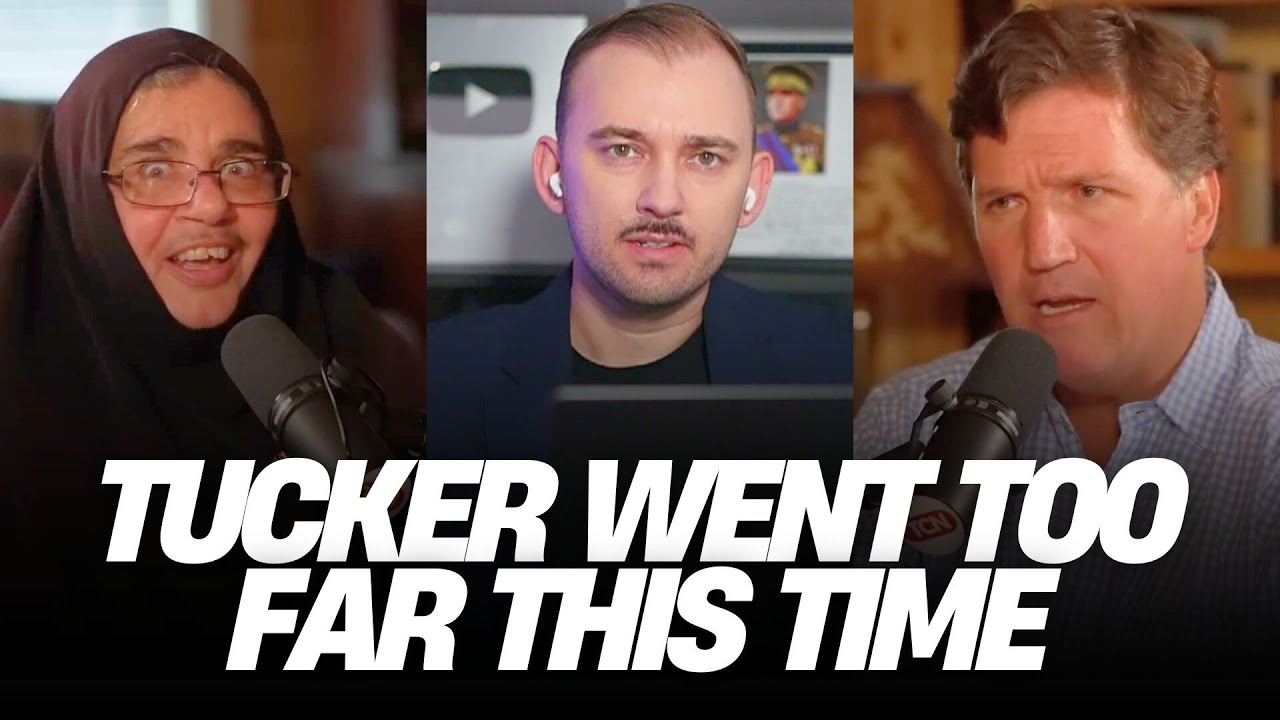
Tucker Carlson recently interviewed Mother Agapia Stephanopoulos, an Eastern Orthodox nun living in the Holy Land, a segment that drew sharp criticism for its controversial claims. The discussion centered on Israel’s role in the Middle East, the Christian population’s decline, and theological interpretations of end-time events. Critics argue the interview spread misleading narratives, including accusations against Israel and distortions of biblical teachings.
The nun’s remarks included allegations that Israel is deliberately reducing the Christian population within its borders, a claim refuted by statistical data showing an increase in Christian communities under Israeli sovereignty. She also suggested that Muslims are not the primary threat in the region, a stance contradicted by widespread persecution of Christians in Muslim-majority areas. Additionally, she criticized Israel’s security measures, including the separation wall, which supporters argue were implemented to prevent terrorist attacks.
The interview faced backlash for its perceived anti-Israel bias and theological inaccuracies. Critics highlighted that the nun’s arguments aligned with conspiracy theories, such as the claim that U.S. foreign policy is influenced by Israel to suppress Christian populations in Muslim nations—a narrative dismissed as baseless. Her comments also drew scrutiny for downplaying Hamas’s violent actions, despite the group’s documented history of atrocities against Israelis and its charter calling for Israel’s destruction.
The segment sparked debates over free speech, religious interpretation, and the role of media in shaping public perception. While some defended the discussion as a platform for diverse viewpoints, others condemned it for spreading falsehoods that could mislead audiences. The controversy underscores ongoing tensions between political narratives, religious beliefs, and historical realities in the region.